


Comparative study of ranibizumab and bevacizumab on corneal neovascula…
본문
Comparative study of ranibizumab and bevacizumab
on corneal neovascularization in rabbits.
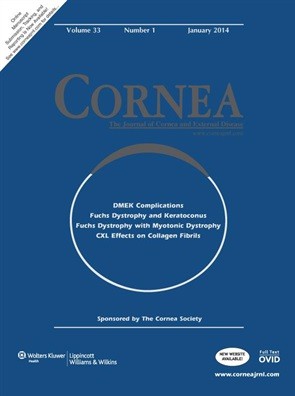
Cornea. 2014 Jan;33(1):60-4
<Eunkyoung Kim, MD>
Cornea. 2014 Jan;33(1):60-4
<Eunkyoung Kim, MD>
토끼의 각막 신생혈관에 대한 루센티스와 아바스틴의 비교 연구
<김은경 원장>
<김은경 원장>

Purpose:
The aim was to compare the effect of subconjunctival injections of ranibizumab
The aim was to compare the effect of subconjunctival injections of ranibizumab
and bevacizumab on corneal neovascularization (NV) in rabbits.
Methods:
NV was induced by placing a suture at the corneal periphery of rabbits (n = 30 eyes). Immediately after suturing,
NV was induced by placing a suture at the corneal periphery of rabbits (n = 30 eyes). Immediately after suturing,
the rabbits were divided into 3 groups and 7 days later administered subconjunctival injections of ranibizumab
(Lucentis; 0.5 mg/0.05 mL), bevacizumab (Avastin; 5 mg/0.05 mL), or normal saline (control), respectively.
The time-course photographs to measure the area of the corneal NV were obtained on days 7, 10, and 14 after suture placement.
Histological examination and immunohistochemical analysis for the vascular endothelial growth factor and CD34 were performed.
Results:
Analysis of digital photographs showed that there was less corneal NV in the ranibizumab- and
Analysis of digital photographs showed that there was less corneal NV in the ranibizumab- and
bevacizumab-treated eyes than in the control eyes (P = 0.012, 1-way analysis of variance);
however, no significant differences between the ranibizumab- and bevacizumab-treated eyes were seen. In addition,
there was less staining for vascular endothelial growth factor and CD34 in the corneas from the ranibizumab-treated eyes
and bevacizumab-treated eyes than in the control eyes,
and there were no significant differences in the staining intensity between the ranibizumab-
and bevacizumab-treated eyes. Subconjunctival ranibizumab and bevacizumab injections were not associated
with any complications during observations.
Conclusions:
Subconjunctival administrations of ranibizumab or bevacizumab inhibit corneal NV in rabbits and have equivalent effects on it.
Subconjunctival administrations of ranibizumab or bevacizumab inhibit corneal NV in rabbits and have equivalent effects on it.